Choosing between mobile detailing and in-shop detailing comes down to four things: the service you need, your vehicle’s current condition, the working environment that service requires, and how much you value convenience versus controlled shop conditions. Neither format is universally better. Each is suited to different circumstances, and the right choice depends on what you want to accomplish with your vehicle.
What Mobile Detailing Means
Mobile detailing brings the technician and equipment to your vehicle’s location—such as your driveway, workplace parking lot, or another accessible spot—rather than requiring you to drop off the vehicle. The appeal is clear: you do not lose time transporting the vehicle, waiting at a shop, or arranging a ride home.
Mobile setups typically rely on portable water tanks, generators or battery power, and compact equipment designed for transport. That portability can also introduce limitations. Wind, dust, direct sunlight, temperature changes, and inconsistent lighting may affect how certain products cure and how easily a technician can identify fine paint defects.
These factors may have little effect on routine maintenance work but can matter more for technical services.
What In-Shop Detailing Means
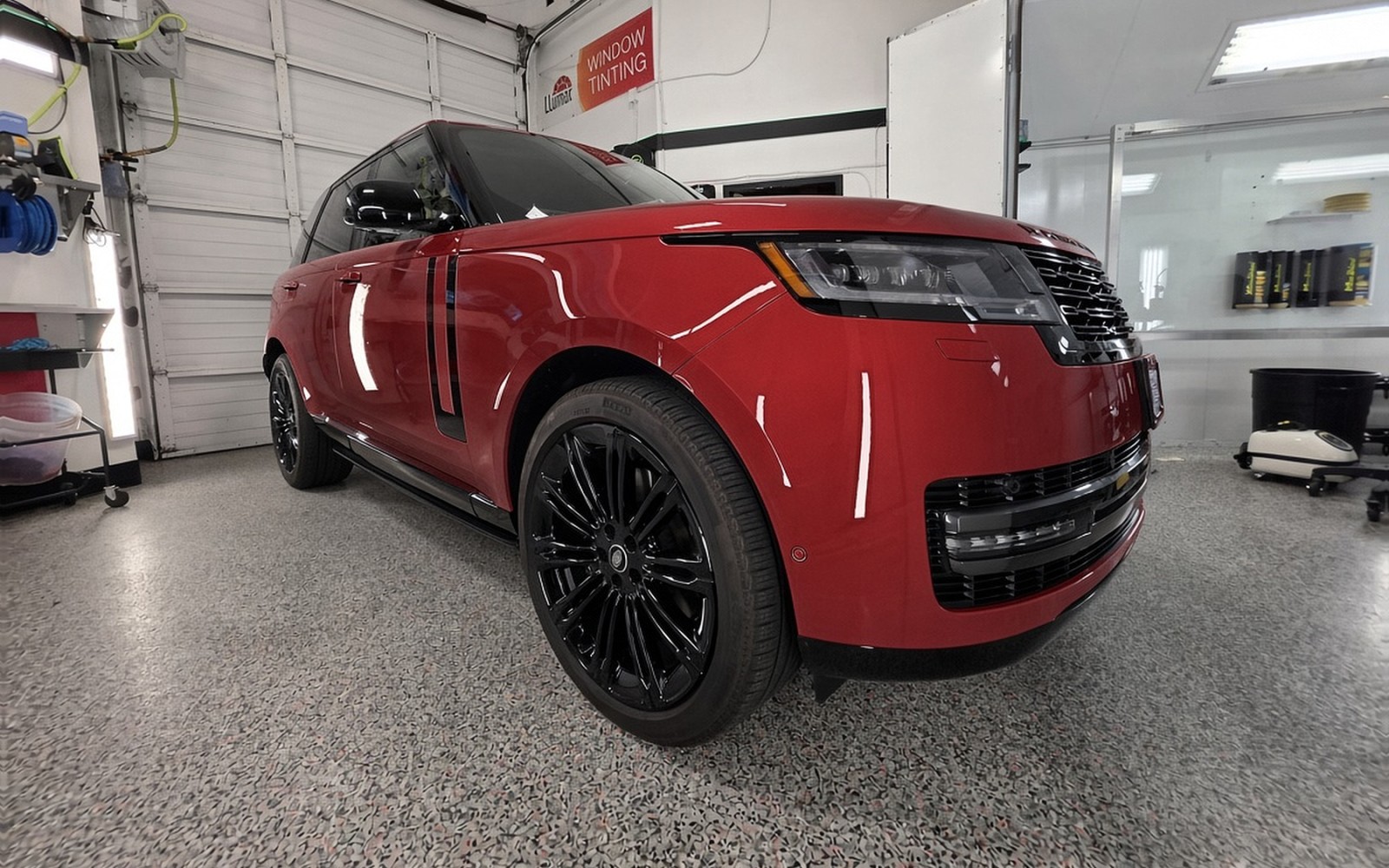
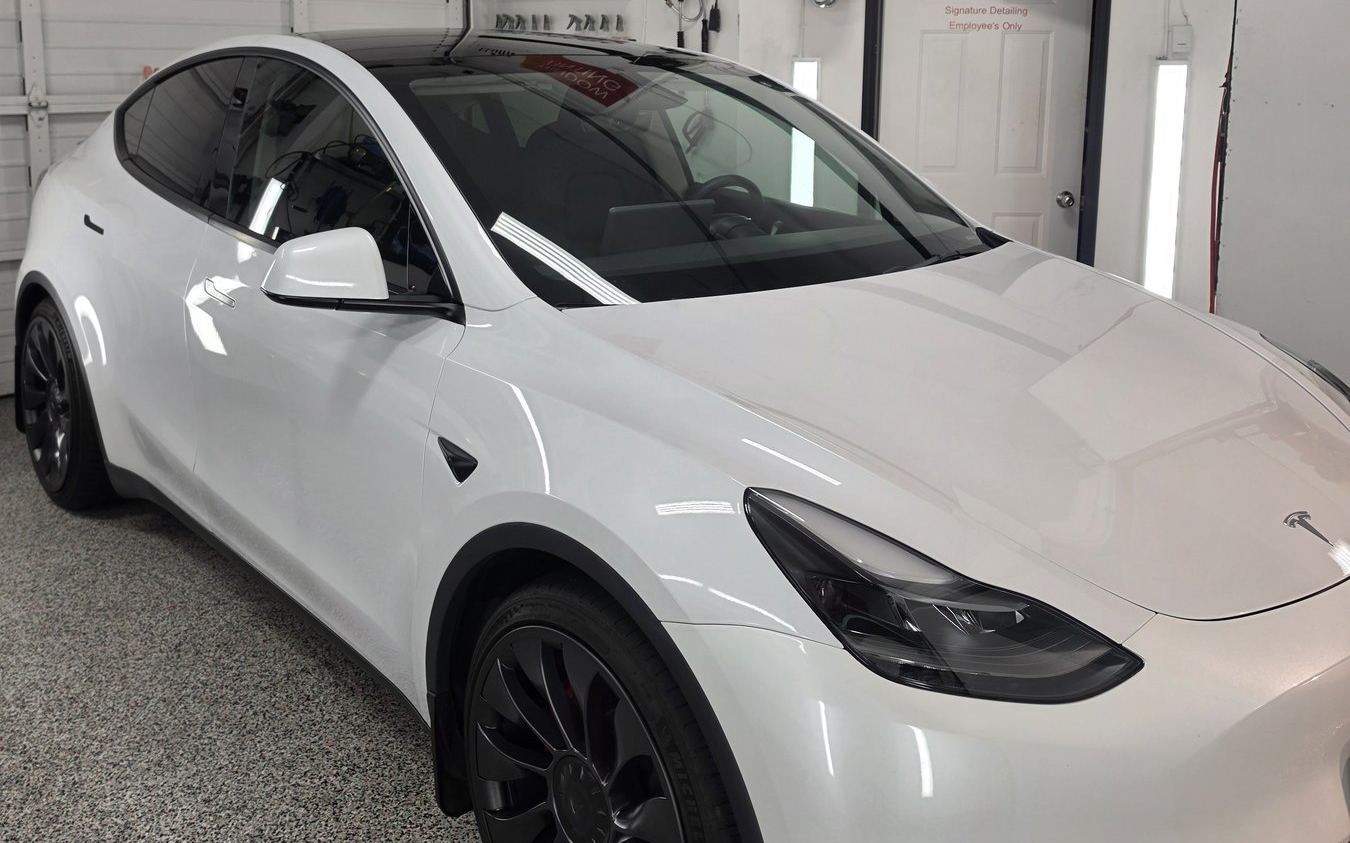
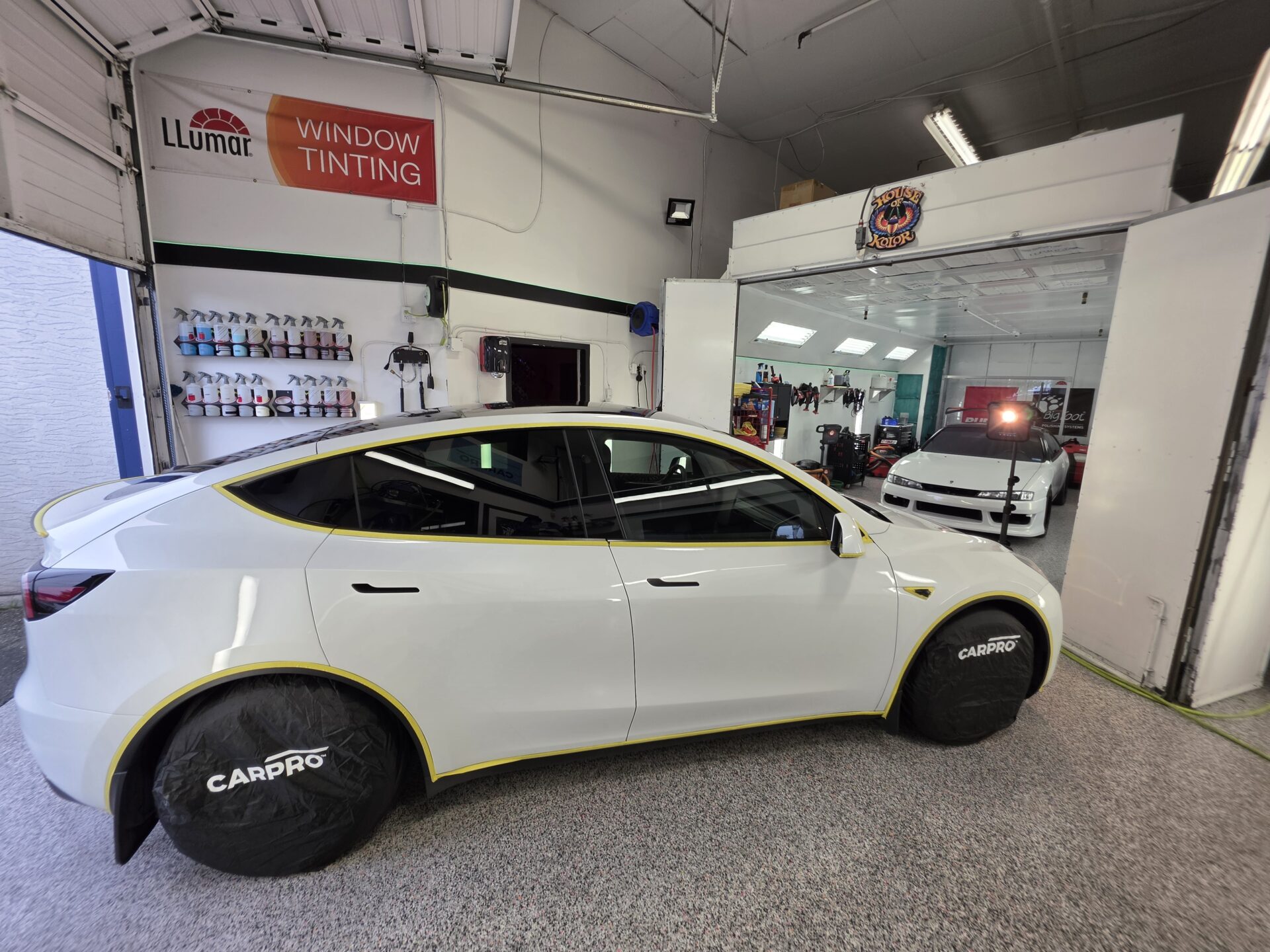
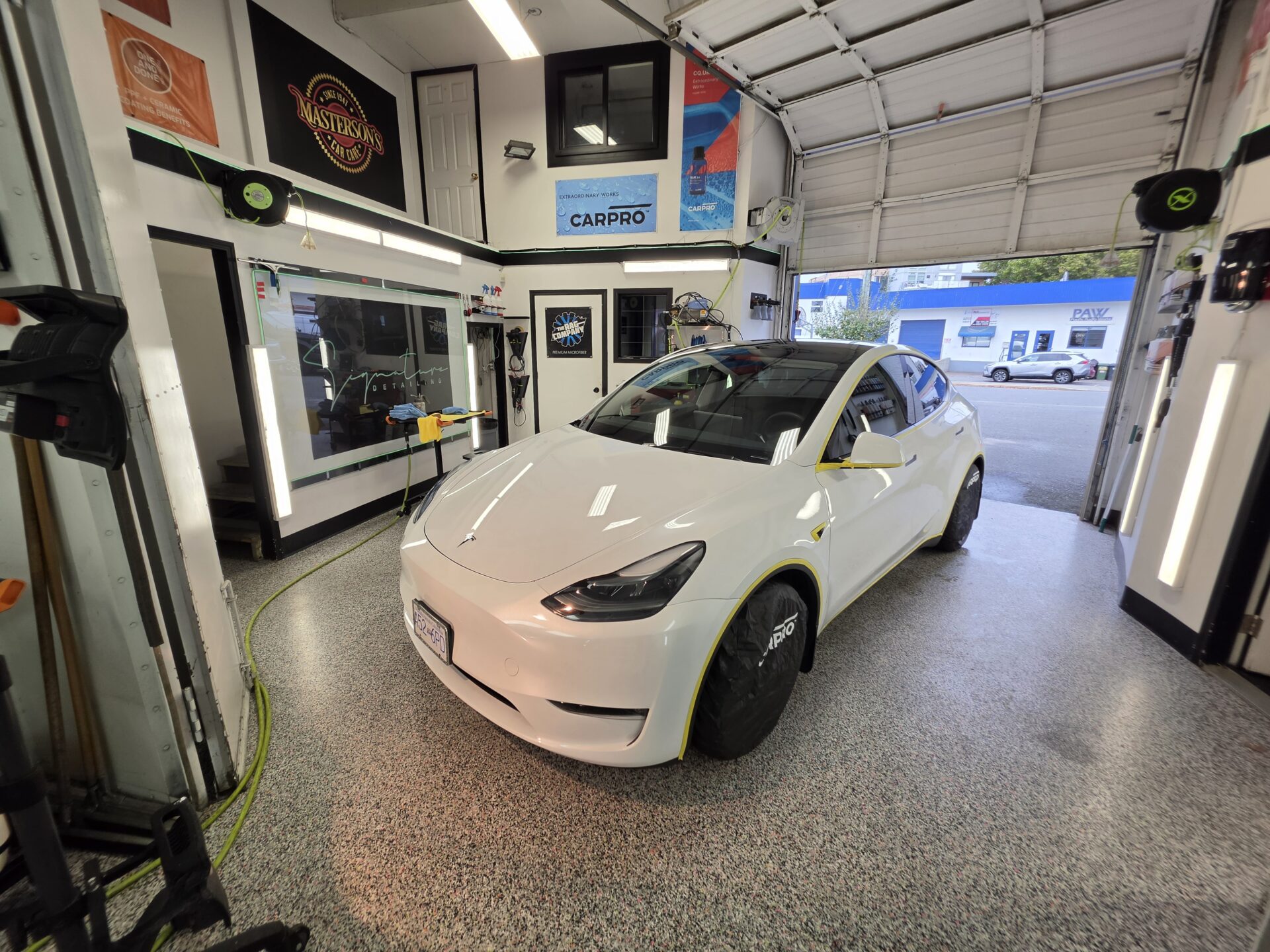
In-shop detailing takes place in a dedicated facility with consistent lighting, access to professional equipment, and protection from changing weather conditions.
This environment is especially valuable for services in which visual precision and application conditions affect the result. Paint correction and ceramic coating preparation are two clear examples.
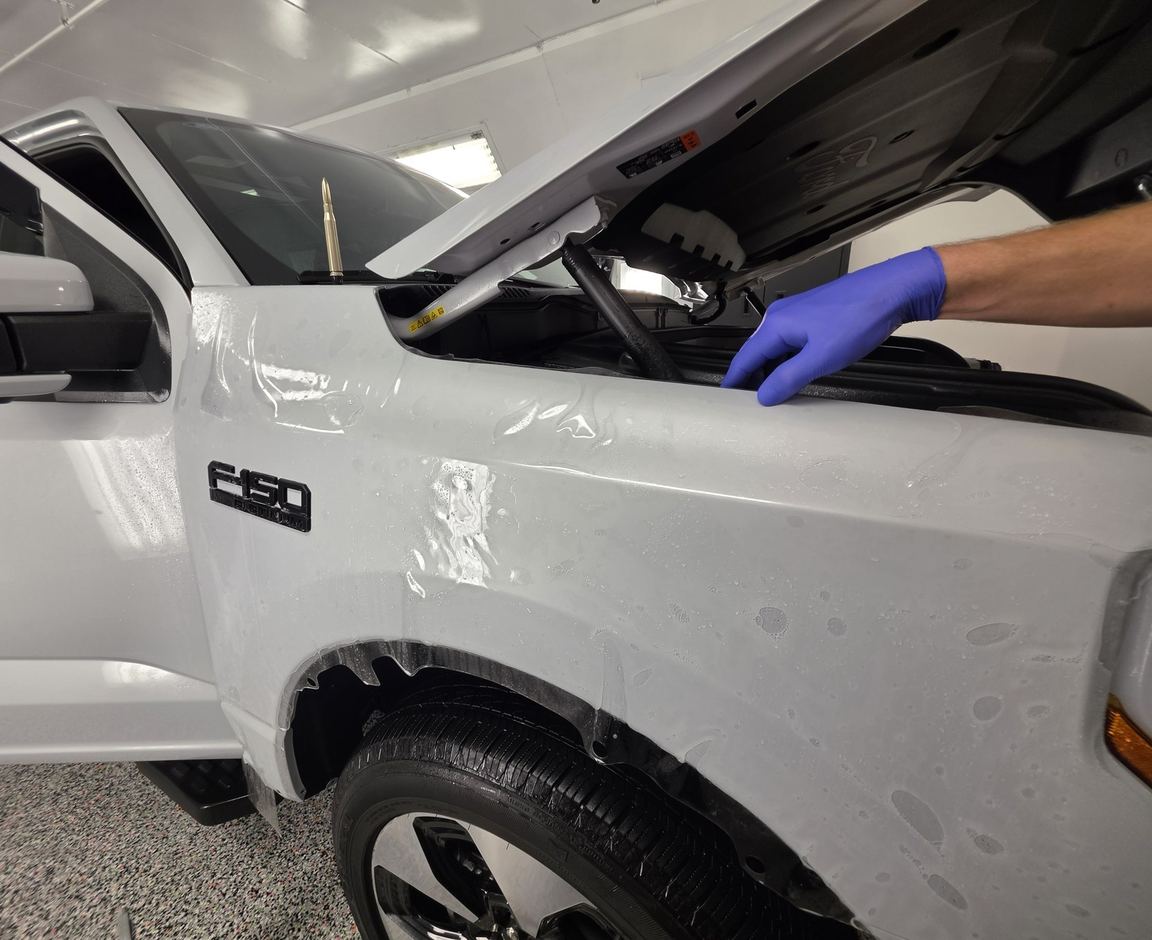
A shop can also accommodate equipment that may not be practical to transport, such as dedicated wash areas, extraction equipment for deep interior cleaning, and sufficient space to complete multi-stage work carefully.
Convenience vs. Working Environment
The decision is not simply that mobile detailing is easier while in-shop detailing is better. It is a trade-off between convenience and environmental control.
For many routine detailing services, convenience may be the deciding factor because the working environment has less influence on the outcome. For more involved correction or protection services, consistent lighting and controlled conditions may justify bringing the vehicle to a studio.
Vehicle Condition and Service Complexity
Vehicle condition is often the deciding factor. A regularly washed and maintained vehicle needs a different service from one with heavy contamination, oxidation, or visible swirl marks.
Routine maintenance detailing, such as an exterior wash or interior refresh, can often be completed in either setting. Heavier correction work benefits from consistent lighting because the technician needs to identify and address paint defects accurately.
Preparation for a ceramic coating may also benefit from an indoor environment, since temperature, humidity, dust, and other contaminants can influence application and curing conditions.
Interior vs. Exterior Requirements
Interior-focused detailing—including shampooing, extraction, and leather conditioning—is generally less dependent on outdoor lighting than exterior correction work.
This makes many interior services practical for mobile setups. Exterior paint correction, by comparison, benefits more directly from stable lighting and a protected workspace.
Paint Correction and Its Relationship to Format
Paint correction involves identifying and reducing imperfections in the vehicle’s clear coat. Accurate inspection is an important part of the process.
Changing sunlight or shadows can make some defects difficult to evaluate. Stable shop lighting helps a technician assess the surface consistently throughout the job and reduces the risk of missing defects that become visible under different conditions.
Ceramic Coating and Its Relationship to Format
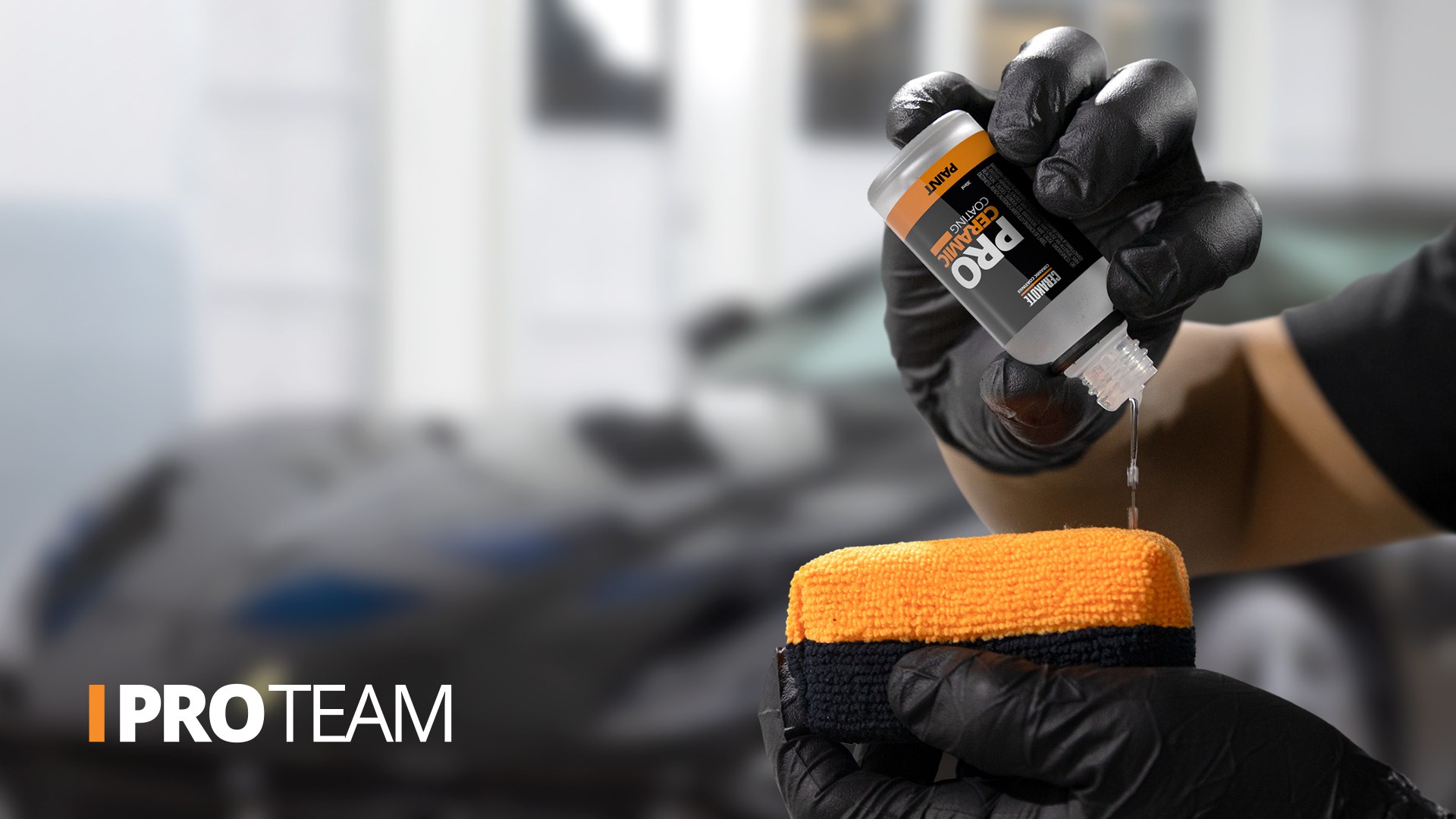
Ceramic coating performance depends heavily on surface preparation and proper application conditions. Dust, temperature fluctuations, and humidity may affect how a coating is applied and cures.
This is why ceramic coating work is commonly performed indoors. It does not mean that a mobile technician cannot apply a coating, but the relevant variables are generally easier to manage in a studio.
Luxury and High-End Vehicle Considerations
Owners of luxury and high-end vehicles may place greater emphasis on paint condition, interior materials, and long-term appearance. These considerations are discussed further in Signature Detailing’s guide to detailing luxury vehicles.
For these vehicles, controlled conditions may be particularly valuable for paint correction, coating preparation, and other precision-focused work.
Daily-Driver Considerations
For a daily-driven vehicle that primarily needs to remain clean, comfortable, and ready for regular use, convenience may carry more weight.
Routine maintenance detailing usually does not require the same level of environmental control as paint correction or ceramic coating preparation.
Mobile Detailing vs. In-Shop Detailing
| Customer Need | Mobile | In-shop |
| Routine maintenance | Convenient and generally suitable | Also suitable, although drop-off may be required |
| Heavy paint correction | Outdoor lighting may make defect assessment more difficult | Controlled lighting supports more consistent inspection |
| Ceramic coating preparation | Weather and dust can affect application conditions | Indoor conditions make environmental variables easier to manage |
| Luxury or high-end vehicle | Convenient for routine care | Often preferred for correction and coating work |
| Interior-focused detailing | Practical because much of the work occurs inside the cabin | Also suitable, with access to dedicated equipment |
| Time-constrained schedule | Strong convenience advantage | Requires time for drop-off and pickup |
When Convenience May Matter Most
Mobile detailing may be a practical choice when:
- The vehicle primarily needs routine maintenance.
- Your schedule makes studio drop-off difficult.
- The paint is already in good condition.
- The service does not depend heavily on controlled lighting or curing conditions.
When Shop Conditions May Matter More
In-shop detailing may be more appropriate when:
- The vehicle needs paint correction or defect removal.
- The vehicle is being prepared for a ceramic coating.
- The paint requires a detailed condition assessment.
- Weather, dust, temperature, or lighting could affect the work.
How to Choose the Right Format
Start with the service rather than the format. Identify what the vehicle needs, consider the working conditions required for that service, and then weigh those requirements against convenience.
Signature Detailing works on vehicles at its dedicated studio in Victoria, BC. This environment provides consistent lighting and protection from changing outdoor conditions, which is particularly valuable for paint correction and ceramic coating preparation.
To discuss the right service for your vehicle, explore Signature Detailing’s professional vehicle care services or visit the studio at 3131 Delta St #4, Victoria, BC. You can also call 250-590-9644 to schedule an appointment.
Frequently Asked Questions
Is mobile detailing as thorough as in-shop detailing?
Mobile detailing can be thorough for routine maintenance services. For paint correction, coating preparation, or other precision-focused work, a shop provides more consistent lighting and environmental conditions.
Can mobile detailers perform paint correction?
Paint correction can be performed in different environments, but stable lighting makes it easier to identify and address fine paint defects accurately. Many detailers therefore prefer controlled shop conditions for correction work.
Does ceramic coating have to be applied in a shop?
Not necessarily. However, coatings can be sensitive to temperature, humidity, dust, and other contaminants during application and curing. Indoor conditions make these variables easier to manage.
What is the main advantage of mobile detailing?
Convenience. The technician comes to the vehicle, reducing the need for drop-off, pickup, or time spent waiting at a facility.
What is the main advantage of in-shop detailing?
A shop provides consistent lighting, protection from the weather, and access to dedicated equipment. These advantages matter most for services such as paint correction and ceramic coating preparation.
How do I know which format my vehicle needs?
Begin by determining what service the vehicle requires. Routine maintenance may be suitable for either format, while paint correction and coating preparation generally benefit more from controlled shop conditions.
Does Signature Detailing offer in-shop service?
Yes. Signature Detailing works on vehicles at its dedicated studio in Victoria, British Columbia.